

How Leak Detection Works Without Breaking Walls
A hidden leak does not mean tearing your home apart to find it. With the right listening, imaging, and testing equipment, the exact source of a leak can be pinpointed first — so only the spot that actually needs repair is ever opened. This is how leak detection in Delray Beach works without breaking walls.
Most homeowners picture guesswork — modern detection is different
Most homeowners picture the same thing when they hear “hidden leak”: a contractor cutting hole after hole in the drywall, pulling up flooring, and still not finding the water. That is guesswork, not modern leak detection. Today, a leak is located with instruments before anyone picks up a saw. Water escaping from a pipe is not silent or untraceable. It makes sound as it sprays or drips under pressure. It changes the temperature of the wall, floor, or slab around it. It raises the moisture level in materials that should be dry, and it drops the pressure in a line that should hold steady. Each clue can be measured from the surface, and together they point to one spot — often within inches.
Why guessing costs more than detecting
Opening a wall on a hunch has three problems. First, the stain on your ceiling or the damp patch on your floor is rarely where the leak is: water travels along pipes and joists before it shows itself, so the visible damage can be several feet from the failed fitting. Second, every wrong opening is damage you then pay to patch, texture, and repaint. Third, while the search goes on, the leak keeps running — wetting insulation, feeding mold, and weakening the materials around it. Non-invasive detection reverses the order: find it first, confirm it, and only then open the smallest possible area for the repair itself.
Step 1 — Listening for the leak
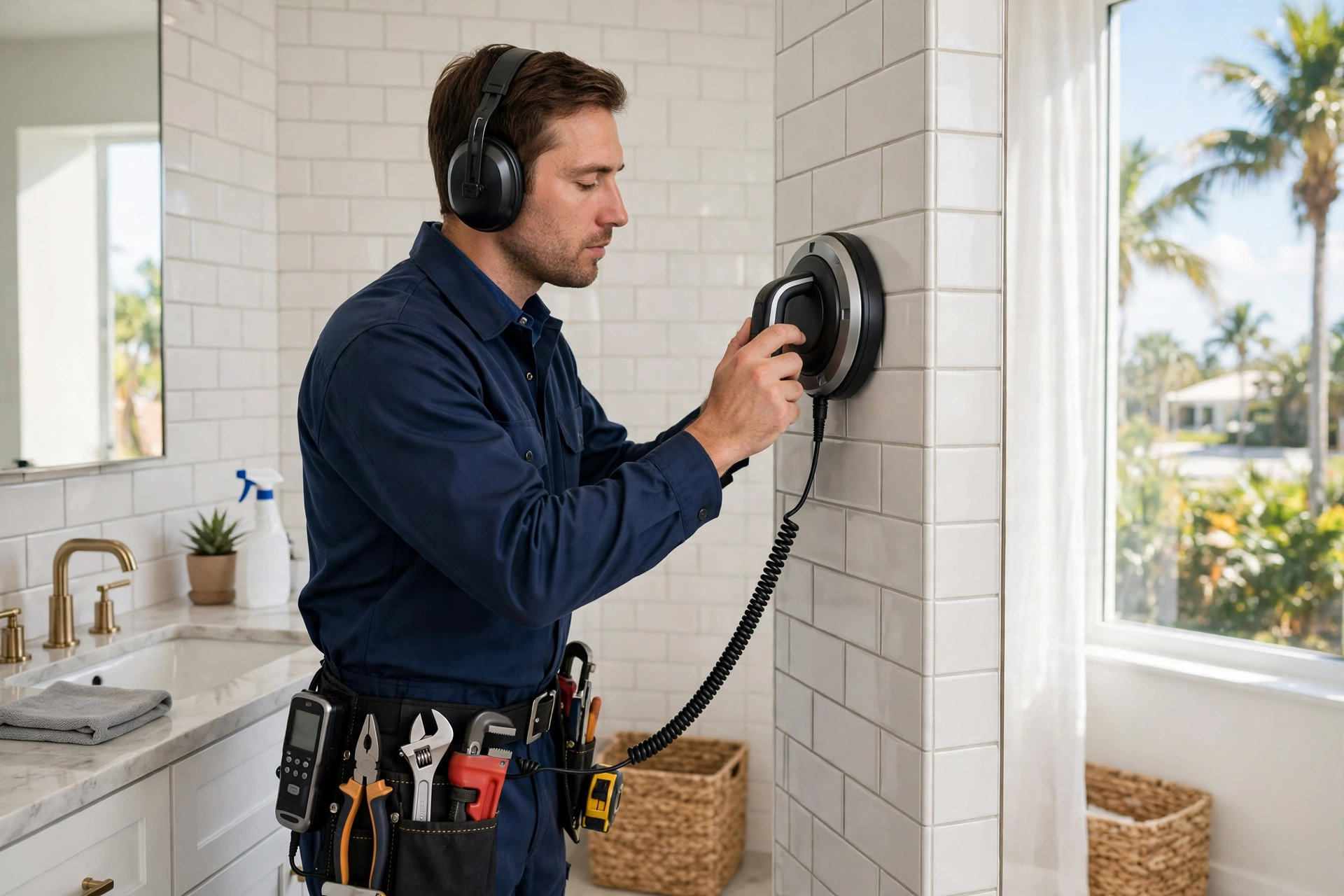
Acoustic leak detection is usually the first tool out of the truck. Pressurized water forcing its way through a crack, a loose joint, or a pinhole creates a distinct sound — a hiss, a spray, or a steady drip — that carries through the pipe and the surrounding material. A technician wearing headphones moves a sensitive ground microphone or listening disc across the wall, floor, or slab. The sound grows louder as the sensor gets closer to the source, and fades as it moves away. Working across the surface in a grid narrows the leak down to a small area instead of a whole room.
Step 2 — Seeing temperature differences
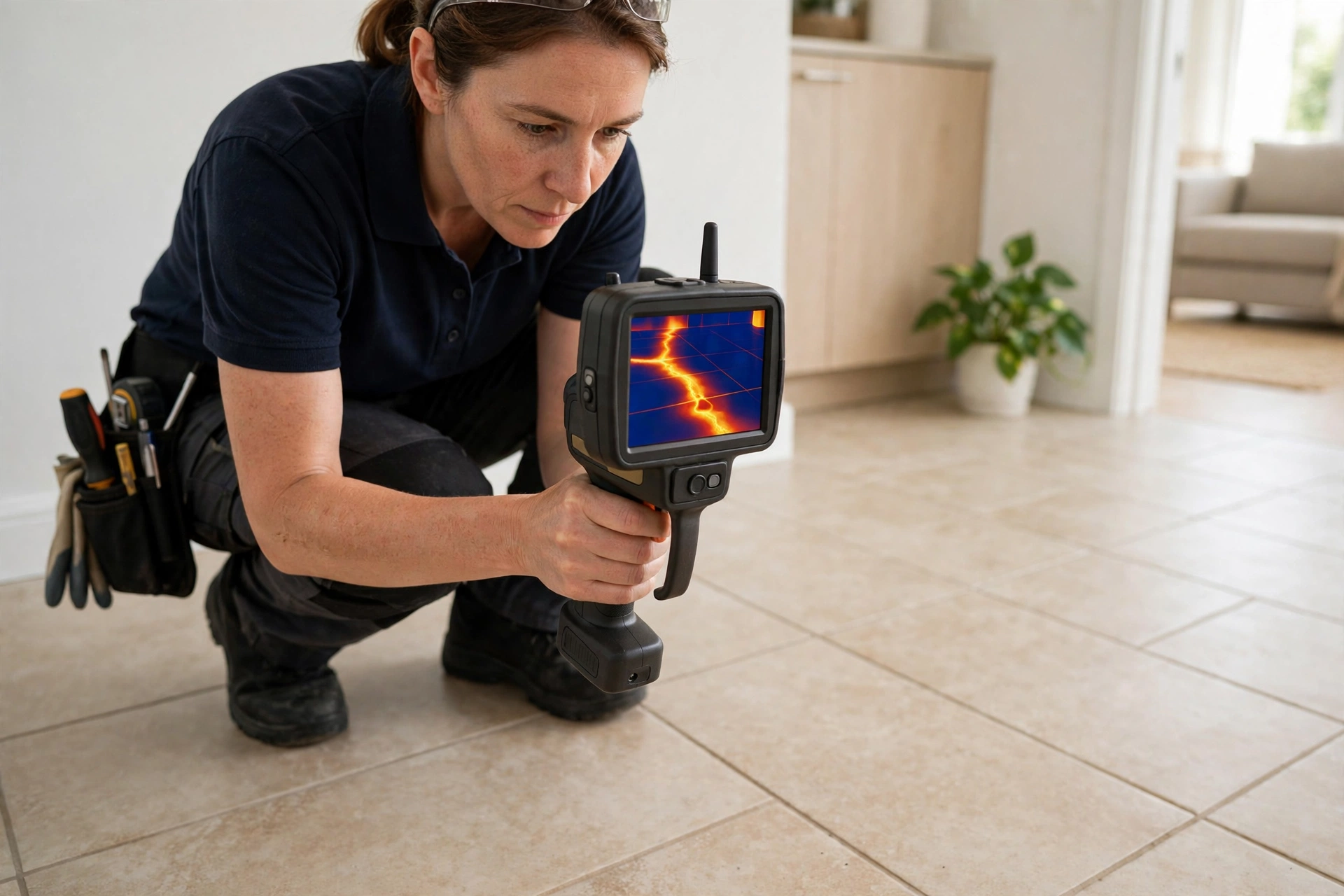
A thermal imaging camera does not see through walls. What it sees is temperature on the surface, in fine detail. Wet material and running water change that temperature: a leaking hot-water line leaves a warm trail, and moisture evaporating from drywall or flooring leaves a cool patch. On screen, those differences appear as a color map. Scanning a floor or wall, a technician can watch a plume of moisture spread from a single point — and that point is where the water is coming from. Thermal imaging is especially useful under tile, wood, and slab floors, where a leak may have no visible sign at all.
Step 3 — Confirming it before anything is opened
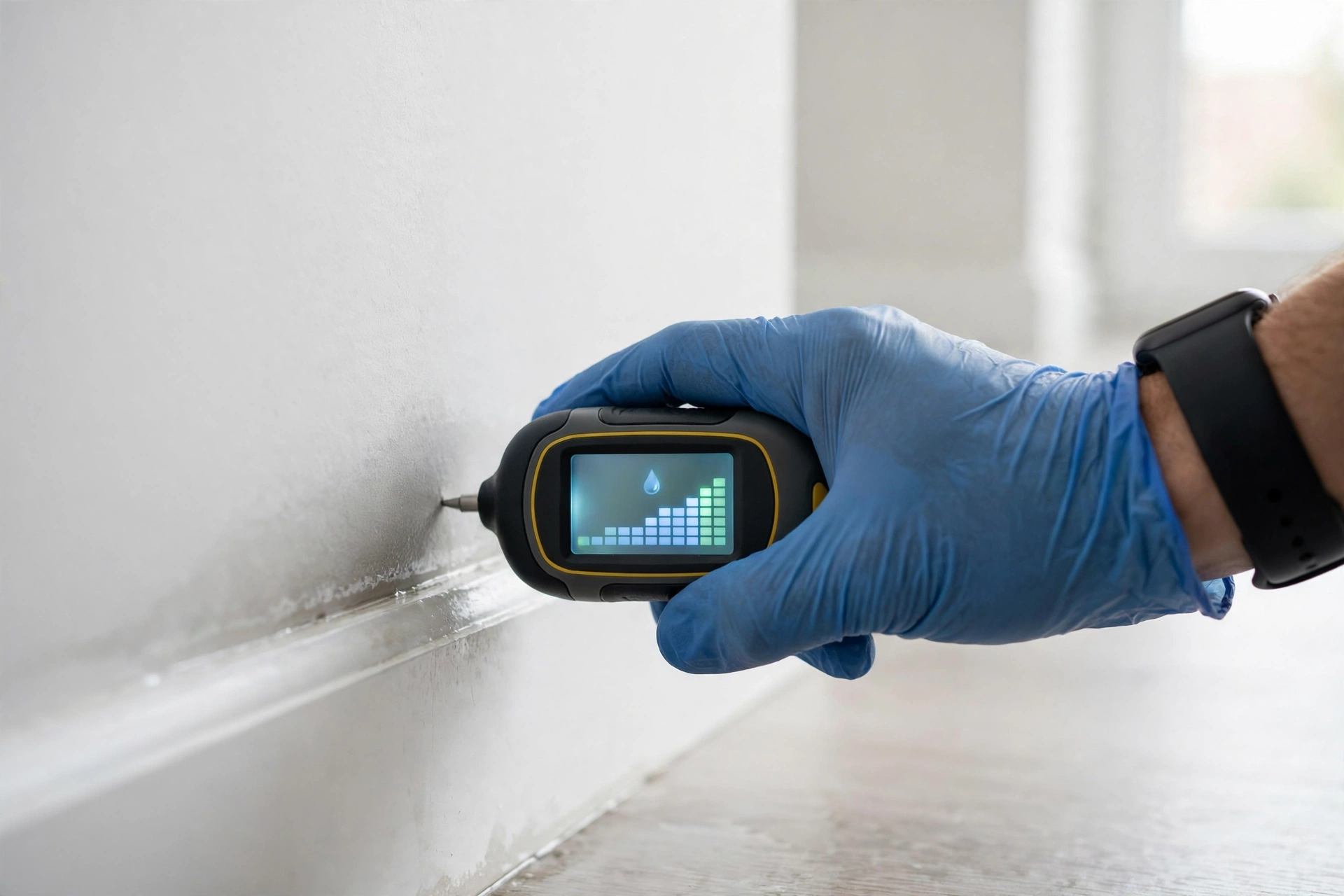
Confirmation comes from measurement. A moisture meter pressed against drywall, baseboard, or flooring reads the material itself: dry where it should be dry, elevated where water has soaked in, mapping the wet zone around the spot the other tools found. Pressure testing answers the other half of the question. The line is isolated and pressurized, and the gauge is watched: a line that cannot hold pressure is leaking; a line that holds is not the problem. Where a leak is hard to reach, tracer methods can be added so the escaping point reveals itself directly. Only when the tests agree does anyone talk about opening a surface — and by then it is one small, planned opening in the right place.
You get proof, not just an opinion
A detection visit should end with something you can hold on to. At Leak Detection Pros, the findings are documented with photos and a written report: where the leak is, how it was located, and what the readings showed. That record matters beyond the repair itself. It shows your plumber exactly where to work, and it gives you clear documentation if you are speaking with your insurance company about water damage. It also protects you from the open-ended search: instead of paying for hours of exploratory demolition, you pay for a located leak and a defined repair.
Signs it is time to have a leak located
You do not need to see water pouring through a ceiling to justify a call. The early signs of a hidden leak are usually quiet ones:
- A water bill that rises with no change in how much water your household uses
- A damp spot, stain, or bubbling paint on a wall or ceiling that keeps coming back
- A musty smell in one room, cabinet, or closet that cleaning does not remove
- A warm spot on a tile or wood floor, which can point to a hot-water line leaking below
- The sound of water running or hissing when every tap and appliance is off
- Low water pressure, or a water meter that keeps moving when nothing is in use
Any one of these is worth checking early. Water damage grows quietly, and the cost of a leak is almost always set by how long it runs before it is found — not by the size of the hole in the pipe.
Leak Detection in Delray Beach: Frequently Asked Questions
Can you find a leak without breaking the floor?
Usually yes. We locate the leak first with non-invasive methods, so any opening is small and in the right place.
How does acoustic leak detection work?
Pressurized water escaping through a crack or joint makes a distinct sound. A sensitive listening sensor is moved across the wall, floor or slab, and the sound grows louder near the source.
What does thermal imaging show?
It shows surface temperature in fine detail. A leaking hot-water line leaves a warm trail and evaporating moisture leaves a cool patch, revealing where the water is coming from.
Will I get a written report?
Yes. Every job includes photos and a written report showing where the leak is, how it was located, and what the readings showed.
How do I know if I have a hidden leak?
Watch for a rising water bill, damp spots or bubbling paint, a musty smell, a warm spot on the floor, the sound of running water with taps off, or a water meter that keeps moving.
Find the Leak. Fix It Fast.
Suspect a hidden leak in your Delray Beach home? We locate it without breaking walls, and you get photos and a written report of what we find. Call Leak Detection Pros at (725) 309-8735. Leak Detection Pros — Bobolink Dr, Delray Beach, FL — 247leakdetectionpros.com