

Polybutylene Pipe in Delray Beach Homes: How to Spot It and Why It Leaks
If your Delray Beach home was built between the late 1970s and the mid 1990s, there is a reasonable chance the water lines running through your walls are grey plastic rather than copper. That material is polybutylene, and it has a reputation in Florida for failing quietly and expensively.
This is not a scare story. Plenty of polybutylene systems are still holding. But it is worth knowing what you have, because the way this pipe fails is exactly the way a leak stays hidden until the bill or the damage gives it away.
What polybutylene pipe is
Polybutylene was used widely in American home construction from roughly 1978 to 1995. It was cheap, flexible and quick to install, and for a while it looked like the obvious replacement for copper.
It is most often grey, though it also turns up in silver, white, blue and black. The blue and black versions are usually the underground yard lines running from the meter to the house.
Where to look for it
- Where pipes come out of the wall under a sink or behind a toilet
- At the water heater connections
- In the washing machine utility box
- At the main shut-off valve
- At the water meter, for the line running in from the street
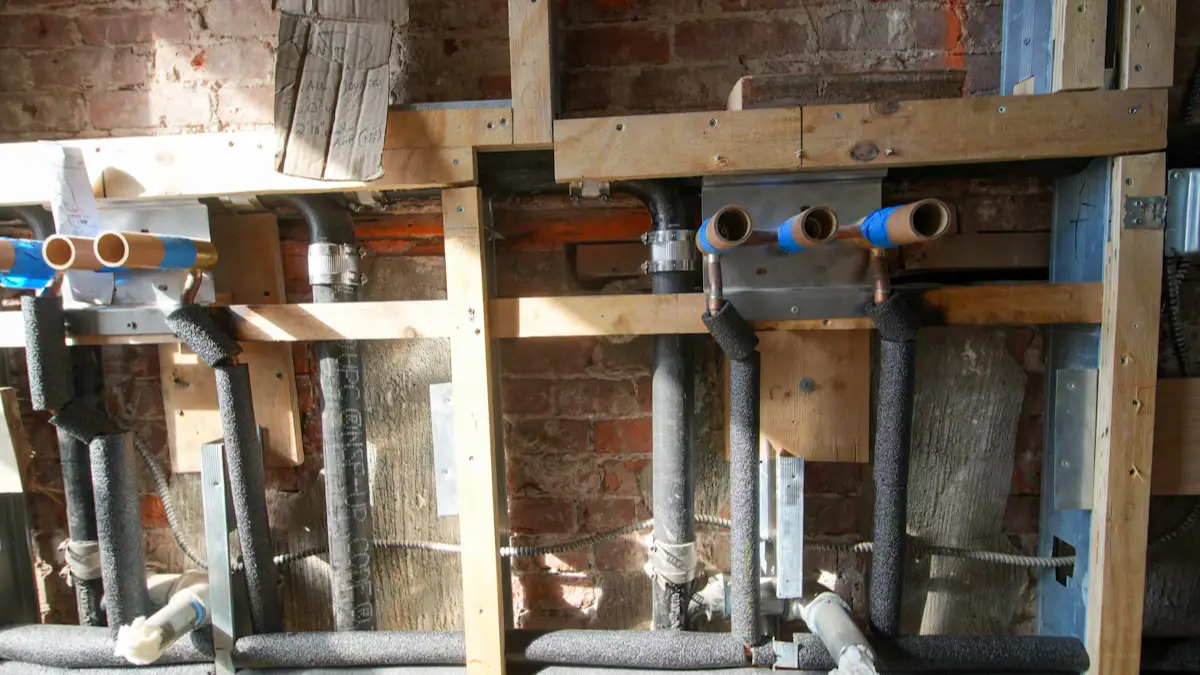
Look for grey plastic pipe around half an inch across, often with bands or crimped metal rings at the fittings. If every visible pipe is copper or white PEX, you are probably in the clear, though the buried yard line can still be polybutylene even when the inside plumbing has been replaced.
Why it fails
The main culprit is chlorine. Municipal water is treated with chlorine and other oxidants, and over years of contact those chemicals attack polybutylene from the inside. The inner wall becomes brittle and starts to micro-crack. Those cracks grow outward until the pipe weeps, then leaks, then in the worst cases splits.
Two things make this worse. Age alone keeps degrading the material, and the fittings are often the first thing to go, especially where a crimp was done too tight or too loose when the house was built.
The part that matters for a homeowner is that the damage happens on the inside of the pipe, where nobody can see it. A pipe that looks perfectly fine from the outside can be close to failing.
Why this matters more in Delray Beach
Two local factors stack on top of the material itself.
The first is how homes here are built. Most sit on a concrete slab poured over sand, with supply lines running in or under that slab. When a line under the slab starts weeping, the water drains into the sand instead of appearing on your floor. You can lose water for months without a single visible sign.
The second is the water itself. Chlorine levels and water chemistry vary by system and by season, and the pipe does not care about averages. It just keeps reacting.
Put those together and a polybutylene slab home is the classic case we get called to: a water bill that climbed with nothing changed indoors, no puddle anywhere, and no idea where to start looking.
Signs worth paying attention to
- Your water bill rises and your household habits have not changed
- The meter keeps moving with every tap, appliance and irrigation zone switched off
- You hear running water when the house is quiet
- A patch of floor feels warm underfoot, which often means a hot water line
- Flooring lifting, grout going dark, or a musty smell along a baseboard
- Water pressure dropping without an obvious reason
Any one of those is worth half an hour with your water meter. Several together usually means water is escaping somewhere you cannot see.
What to do if you think you have it
1. Check the meter before you do anything else
Turn off every tap, appliance and irrigation zone and make sure nobody flushes. Find the meter and watch the small leak indicator dial, or write down the reading and check again after thirty minutes. Movement means water is escaping. No movement means your plumbing is holding today, whatever material it is made of.
2. Identify what you actually have
Check the spots listed above. If you can see grey plastic pipe at the water heater or under a sink, you have at least some polybutylene. A home inspector or plumber can confirm it in a few minutes.
3. Get a leak located before anyone opens anything
If the meter says you are losing water, the question becomes where. That is slab leak detection if the line runs under the floor, or service line detection if it is the buried pipe between the meter and the house. Either way the leak gets pinpointed with acoustic listening and pressure testing first, so any repair goes to one marked spot rather than an exploratory hole.
4. Plan, do not panic
Finding polybutylene does not mean the house needs repiping tomorrow. It means you should know it is there, watch your bill, and deal with a leak quickly when one appears rather than letting it run.
About the old class action
You may come across references to a large settlement over polybutylene plumbing. That was Cox v. Shell Oil, approved in November 1995, with defendants initially committing around 950 million dollars to compensate owners and replace pipe for a nationwide class of roughly six million property owners.
The important part for anyone reading this today: the claim filing deadline expired in 2009. There is no compensation fund to apply to now. If you see a company implying otherwise, be careful.
The short version
- Polybutylene was installed in US homes from about 1978 to 1995 and is usually grey
- Chlorine in treated water degrades it from the inside, so failure is invisible until it leaks
- Delray Beach slab construction hides the resulting leak in sand under the floor
- The water meter test is free and tells you whether you are losing water right now
- The compensation scheme closed in 2009
If your bill has climbed and you cannot find a reason, that is worth checking properly. You can read more on our high water bill page, browse the leak detection FAQs, or get in touch and describe what you are seeing. If it turns out to be something you can fix yourself, we will tell you.